AI in Jobs & Workforce
The AI Layoff Boomerang: 55% of Firms Regret Replacing Workers
A growing wave of companies are quietly rehiring workers they replaced with AI as Forrester reports 55% of employers regret AI-driven layoffs and Gartner predicts half of all AI job cuts will be reversed by 2027.
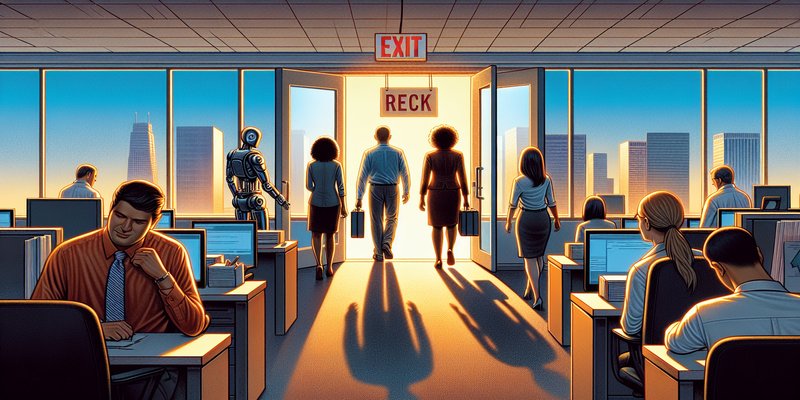
The Great AI Layoff Boomerang
After two years of aggressive workforce reductions justified by artificial intelligence, a counter-trend is emerging that few predicted. Companies across industries are quietly rehiring workers they replaced with AI, often under different job titles and sometimes at lower wages. The reversal is being driven by a simple reality: AI simply cannot replicate the empathy, judgment, and complex problem-solving that many roles require.
Forrester Research estimated in its 2026 Future of Work report that 55% of employers now regret laying off workers for AI-related reasons. The figure is striking given how confidently many executives touted AI as a replacement for human labor just 12 to 18 months ago. Gartner has gone further, projecting that 50% of companies that cut customer service staff due to AI will rehire those workers by 2027, though the roles may return under different titles.
High-Profile Reversals Pile Up
The list of companies walking back AI-driven cuts continues to grow. Klarna, whose CEO Sebastian Siemiatkowski became a poster child for AI-first workforce strategy, has acknowledged the limits of the approach. Siemiatkowski stated: "From a brand perspective, a company perspective, I just think it's so critical that you are clear to your customer that there will be always a human if you want."
Other high-profile stumbles have reinforced the message. Air Canada was held legally liable after its AI chatbot fabricated a refund policy and provided it to a customer, resulting in a landmark court ruling. McDonald's abandoned a three-year AI drive-thru experiment after the system kept making errors like adding bacon to ice cream orders. Companies including IBM, Salesforce, Google, and Meta have all added workers in redefined roles since late 2025 to help steer their AI services.
The Numbers Tell the Story
The data behind the reversal is compelling. AI was cited in 54,836 announced layoff plans in 2025, bringing the total to 71,825 job cuts attributed to AI since 2023. But the rehiring rate is accelerating: more than a third of companies have already rehired more than half the roles they eliminated, according to industry surveys. The overall rate of terminated employees being rehired by former employers has risen to 5.3%, up from historically stable levels.
Gartner analyst Emily Potosky summarized the core issue: "AI simply isn't mature enough to fully replace the expertise, empathy, and judgment that human agents provide." Forrester's J.P. Gownder added that leaders must treat AI as a tool to enhance human talent rather than a wholesale replacement.
The Rise of "AI-Washing" in Layoffs
The reversal trend has also exposed a phenomenon researchers call "AI-washing" — where companies attribute layoffs to AI capabilities that don't actually exist or aren't yet functional. In some cases, AI served as a convenient public narrative for workforce reductions driven by overhiring during the pandemic boom, market downturns, or strategic pivots unrelated to automation.
Only 20% of customer service leaders surveyed said they actually reduced staff because of AI capabilities, far lower than the headline figures would suggest. The gap between AI-attributed layoffs and AI-caused layoffs is significant, and it complicates efforts to understand the technology's true impact on employment.
What This Means for Workers and Job Seekers
For workers displaced by AI-driven layoffs, the rehiring trend offers cautious optimism. Roles are returning, though often with new titles that emphasize AI collaboration rather than replacement. For job seekers, the message is nuanced: AI skills remain valuable, but companies are learning that purely technical capabilities are not enough. Roles that require empathy, complex judgment, and human connection are proving more resistant to automation than many predicted, creating opportunities for workers who can combine domain expertise with AI literacy.