AI Regulation & Global
China Targets 10 Trillion Yuan AI Industry by 2030
China's new five-year plan positions AI as the centerpiece of economic strategy, mentioning artificial intelligence over 50 times and targeting a 10 trillion yuan ($1.45T) AI industry by 2030.
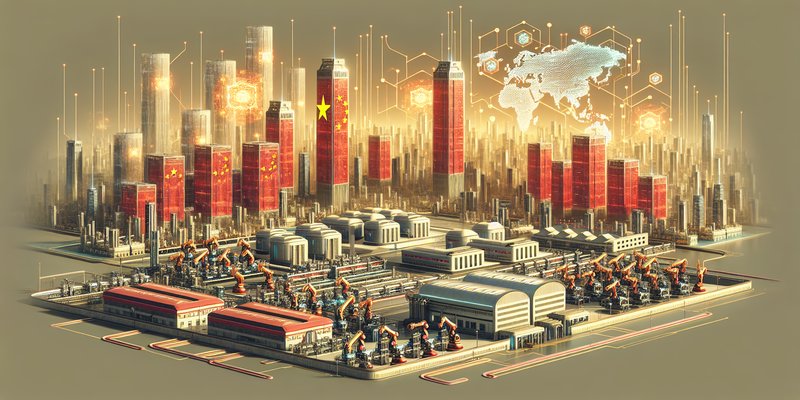
China unveiled its 15th Five-Year Plan (2026–2030) at the National People's Congress in early March, placing artificial intelligence at the absolute center of its economic strategy. The blueprint mentions AI more than 50 times and sets a target for China's AI-related industries to exceed 10 trillion yuan ($1.45 trillion) by the end of the decade. The plan outlines a sweeping "AI+ action plan" aimed at embedding artificial intelligence across manufacturing, healthcare, logistics, education, and every major sector of the economy.
The "AI+ Action Plan"
The heart of the five-year blueprint is an ambitious integration strategy that treats AI as an operating system for the entire economy. The plan calls for raising the value-added of core digital economy industries to 12.5% of GDP, up from current levels, through AI adoption across the full supply chain. Key policy mechanisms include an integrated national data market to fuel AI development, sector-specific AI deployment across manufacturing, healthcare, and logistics, "hyper-scale" computing clusters for training advanced AI models, and a comprehensive AI security system covering governance and safety.
Officials described these technologies as part of "new quality productive forces" — advanced industries expected to drive future economic growth and help China escape the middle-income trap.
Beyond AI: Quantum, Robotics, and 6G
The plan extends beyond artificial intelligence to encompass a broad technology agenda. China intends to expand investment in scalable quantum computers and develop an integrated space-earth quantum communication network linking ground stations and satellites. Additional priority areas include humanoid robotics, 6G networks, brain-machine interfaces, nuclear fusion energy, and large-scale computing infrastructure to support AI systems.
The quantum communication network represents a particularly ambitious goal — building a satellite-linked quantum encryption system that would provide theoretically unbreakable communications for government and military use.
Geopolitical Context: US-China Tech Rivalry
The plan's emphasis on domestic innovation and self-reliance directly reflects escalating US-China technology tensions. Washington's semiconductor export controls have limited Chinese access to advanced chips from Nvidia, AMD, and ASML, while Beijing has responded by restricting exports of critical minerals and rare earth materials essential for chip manufacturing.
"The plan reflects President Xi Jinping's vision of developing 'new productive forces' to counter the demographic downturn and enhance self-sufficiency."
By investing massively in domestic AI capabilities and alternative computing paradigms like quantum, China is positioning to reduce its dependency on Western technology while building competitive advantages in next-generation computing.
Implementation Path
Following the plan's release at the National People's Congress, ministries and provincial governments will translate the high-level targets into detailed implementation plans and specific projects. This cascading process typically takes 6–12 months and results in sector-specific policies, funding allocations, and infrastructure timelines that shape China's technology investment for the next five years.
What This Means for Engineers
China's AI push has global implications. Companies competing in AI, cloud computing, quantum, and robotics must account for a massive state-backed competitor investing trillions in talent, infrastructure, and deployment. For engineers, this means growing demand for AI expertise globally, expanding opportunities in quantum computing and robotics, and increasing importance of understanding the geopolitical dimensions of technology careers. InterviewAlly helps you prepare for technical interviews at companies navigating this global AI landscape.