Frontier Labs
Northwestern Prints Artificial Neurons That Talk to Brain Cells
Northwestern engineers developed printed artificial neurons from nanoscale graphene and molybdenum disulfide inks that generate signals realistic enough to activate living mouse brain cells — a breakthrough published in Nature Nanotechnology that advances brain-computer interfaces.
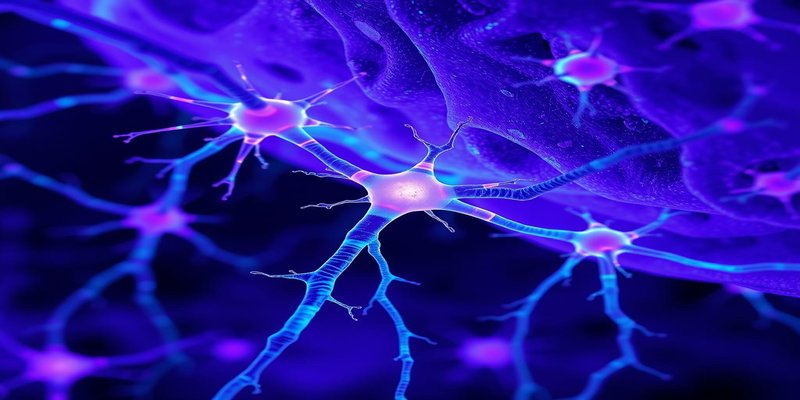
Artificial Neurons Made From Ink Successfully Activate Living Brain Cells
Engineers at Northwestern University have created artificial neurons using soft, printable materials that can directly communicate with living brain cells — a breakthrough published April 15 in the journal Nature Nanotechnology. Led by professor Mark Hersam, the team developed flexible, low-cost devices that generate electrical signals realistic enough to trigger responses from real neurons in mouse brain tissue slices.
The advance represents a significant step toward electronics that can seamlessly interface with the nervous system, with potential applications spanning hearing implants, vision restoration, movement neuroprosthetics, and brain-machine interfaces. Unlike previous rigid silicon-based neural interfaces, these printed neurons use materials that more closely mimic the softness and flexibility of biological tissue, reducing the risk of rejection and damage.
Graphene and MoS2 Inks Printed With Aerosol Jets
The backbone of the breakthrough is a series of electronic inks formulated from nanoscale flakes of molybdenum disulfide (MoS2) and graphene. These materials were deposited onto flexible polymer substrates using aerosol jet printing, a specialized technique that allows precise patterning of electronic components at microscale resolution. The resulting devices are thin, flexible, and biocompatible.
Molybdenum disulfide was chosen for its semiconducting properties — it can switch electrical signals on and off, much like transistors in conventional electronics — while graphene provides excellent electrical conductivity for the device's interconnects. Together, these materials form artificial neurons that can generate voltage spikes mimicking the action potentials that real neurons use to communicate, with timing and amplitude characteristics close enough to trigger responses from biological tissue.
Triggering Real Neurons in Mouse Brain Slices
In experiments, the artificial neurons were placed in contact with slices of tissue from mouse brains, and the devices successfully triggered responses from real neurons. The artificial signals were realistic enough that biological neurons treated them as genuine inputs, firing their own action potentials in response. This bidirectional communication — artificial-to-biological and the potential for biological-to-artificial — is the fundamental capability needed for next-generation neural interfaces.
"By mimicking how neurons signal, futuristic systems could perform complex operations using far less power than today's data-hungry technologies." — Northwestern University research team
The printing approach also offers a path to mass production. Unlike traditional microfabrication techniques that require expensive cleanroom facilities, aerosol jet printing can be performed in standard laboratory environments and scaled to produce large numbers of devices at relatively low cost. This manufacturing advantage could accelerate the timeline from laboratory demonstrations to clinical applications.
From Neuroprosthetics to Neuromorphic Computing
The most immediate applications are in medical implants. Current cochlear implants for hearing and deep brain stimulation devices for Parkinson's disease use rigid electrodes that can damage surrounding tissue over time. Printed artificial neurons that match the mechanical properties of brain tissue could last longer and cause less inflammation, potentially improving outcomes for the millions of patients who rely on neural implants.
Beyond medicine, the technology has implications for neuromorphic computing — building computer chips that process information the way brains do. Conventional chips consume enormous amounts of energy compared to biological brains, and artificial neurons that genuinely mimic biological signaling could form the basis of ultra-low-power computing systems. The intersection of printable electronics and neuroscience could eventually yield hybrid biological-electronic computing platforms that combine the efficiency of biological processing with the precision of electronic control.
What This Means for Engineers and Job Seekers
Brain-computer interface technology is one of the fastest-growing sectors at the intersection of engineering and neuroscience. Companies like Neuralink, Synchron, and Paradromics are actively hiring engineers with expertise in bioelectronics, materials science, and neural signal processing. Northwestern's breakthrough using printable, biocompatible materials opens a parallel track of development that could create demand for materials engineers, biomedical device specialists, and manufacturing engineers familiar with additive manufacturing techniques.
For the broader tech workforce, advances in brain-computer interfaces represent a long-term shift in how humans interact with computers — one that could eventually supplement or replace keyboards, mice, and touchscreens for certain applications. While commercial deployment remains years away, the research pipeline is accelerating, and companies in this space are some of the most active hirers among deep-tech startups.