Executive Statements
Sam Altman: AI Will Replace Entry-Level Jobs
OpenAI CEO Sam Altman predicts AI will automate most entry-level white-collar work, urging professionals to shift toward creative and strategic thinking roles.
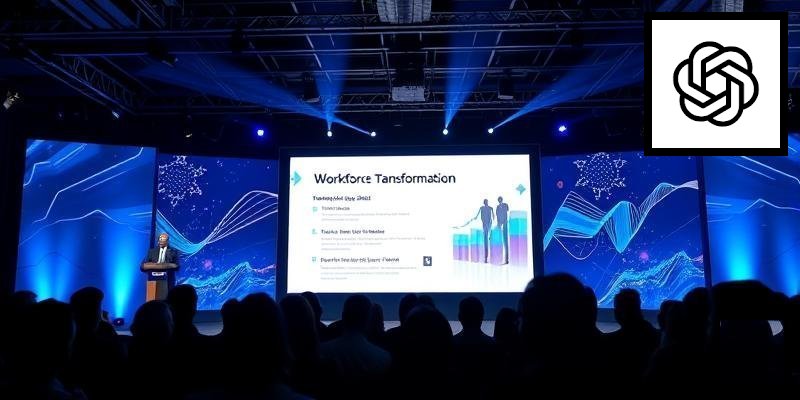
OpenAI CEO Sam Altman made waves this week with a stark prediction about the future of work: artificial intelligence will automate the majority of entry-level white-collar jobs within the next few years, fundamentally reshaping how humans participate in the workforce. Speaking at a technology conference in San Francisco, Altman argued that the shift isn't something to fear but rather an opportunity for workers to move into more creative, strategic, and uniquely human roles.
Altman's Prediction: The End of Routine Knowledge Work
During his keynote, Altman laid out a timeline that many in the audience found both compelling and unsettling. He described a near future where AI systems handle the bulk of tasks currently performed by junior analysts, entry-level accountants, first-year associates at law firms, and customer service representatives.
"Within three to five years, most of the routine cognitive tasks that define entry-level white-collar jobs will be performed more efficiently by AI systems. This isn't a prediction — it's already happening. The question is how quickly organizations adapt." — Sam Altman, CEO of OpenAI
Altman pointed to OpenAI's own internal data showing that GPT-based systems already handle roughly 40% of tasks that would traditionally require a junior employee. He noted that companies using AI assistants have reported 60-70% reductions in time spent on data entry, report generation, and basic research tasks.
Which Jobs Are Most at Risk?
Altman was specific about the types of roles he expects AI to absorb. He categorized them into three tiers based on how quickly automation would take hold:
- Immediate impact (2026-2027): Data entry clerks, basic financial analysts, first-level customer support, transcription and translation services, and routine legal document review.
- Near-term impact (2027-2028): Junior software developers (for boilerplate code), entry-level marketing analysts, basic accounting roles, and administrative assistants.
- Medium-term impact (2028-2030): Junior consultants, associate-level research roles, entry-level journalism (basic reporting), and lower-level project management.
Industry analysts largely agree with the broad strokes. A recent McKinsey report estimated that 30% of hours worked across the U.S. economy could be automated by 2030, with administrative and clerical roles seeing the highest displacement rates at nearly 50%.
The Human Advantage: Creativity and Strategy
Altman was careful to frame his predictions not as doom-and-gloom but as an evolution. He argued that the displacement of routine cognitive work would push humans toward roles that leverage uniquely human capabilities — creativity, emotional intelligence, complex problem-solving, and strategic thinking.
"The most valuable human skills in an AI-saturated economy will be the ones machines can't replicate: genuine creativity, the ability to build trust, ethical judgment, and the kind of strategic thinking that requires understanding human motivation." — Sam Altman
He pointed to historical precedents, noting that ATMs didn't eliminate bank tellers — they actually increased the number of bank branches by making them cheaper to operate, while tellers shifted to customer relationship roles. He expects a similar dynamic with AI, where automation creates new categories of work even as it eliminates others.
How Professionals Should Prepare
For workers currently in entry-level positions or preparing to enter the workforce, Altman offered concrete advice. He emphasized the importance of developing "AI-complementary" skills rather than competing with AI on tasks it can do better.
- Learn to work with AI: Understanding how to prompt, direct, and quality-check AI outputs will be a baseline skill for most knowledge workers.
- Develop domain expertise: Deep knowledge in a specific field, combined with AI tools, makes workers far more valuable than either alone.
- Build interpersonal skills: Negotiation, leadership, client management, and team collaboration remain firmly in the human domain.
- Embrace continuous learning: The pace of change means skills have shorter shelf lives, making adaptability the most important trait.
For job seekers navigating this rapidly shifting landscape, tools like InterviewAlly can provide a significant advantage. AI-powered interview preparation helps candidates demonstrate not just technical competence but the adaptive thinking and communication skills that employers increasingly value over routine task execution.
Industry Reactions: Agreement and Pushback
Altman's comments drew immediate reactions from across the tech industry and beyond. Sundar Pichai, CEO of Alphabet, echoed similar sentiments in a statement, noting that Google is already restructuring teams to reflect AI-augmented workflows. Meanwhile, labor economists and workforce advocates pushed back on the timeline.
Professor Daron Acemoglu of MIT, a leading voice on technology and labor markets, cautioned against accepting tech CEO predictions at face value. He noted that previous waves of automation took decades to fully materialize and that institutional, regulatory, and social factors significantly slow adoption.
"Tech leaders have a financial incentive to overstate the speed and inevitability of automation. The reality is always more nuanced, more gradual, and more shaped by policy choices than Silicon Valley likes to admit." — Daron Acemoglu, MIT economist
Nevertheless, the broad consensus among economists is that significant disruption is coming, even if the exact timeline remains uncertain. The Bureau of Labor Statistics projects that administrative and clerical occupations will decline by 8% through 2030, while roles requiring creativity, critical thinking, and interpersonal skills are expected to grow by 12-15%.
What This Means for the Job Market
Altman's statements carry weight not just because of his position at OpenAI but because they reflect a growing consensus among tech leaders. The implications for hiring, education, and career planning are profound. Companies are already restructuring entry-level programs, with some eliminating traditional analyst classes in favor of smaller teams equipped with AI tools.
Universities and coding bootcamps are scrambling to update curricula, with Stanford, MIT, and Harvard all announcing new programs focused on "AI-augmented professional skills" in the past six months. The message is clear: the entry-level jobs of 2020 won't exist in their current form by 2030, and the professionals who thrive will be those who learn to work alongside AI rather than compete against it.
Whether Altman's timeline proves accurate or overly optimistic, the direction of travel is unmistakable. The era of routine cognitive work as the primary entry point into white-collar careers is drawing to a close.