Funding & Valuations
Foxconn Revenue Surges 21.6% on AI Server Boom
Foxconn posted a 21.6% revenue increase to a record NT$1.33 trillion in the first two months of 2026, driven by surging demand for NVIDIA-based AI servers and cloud infrastructure.
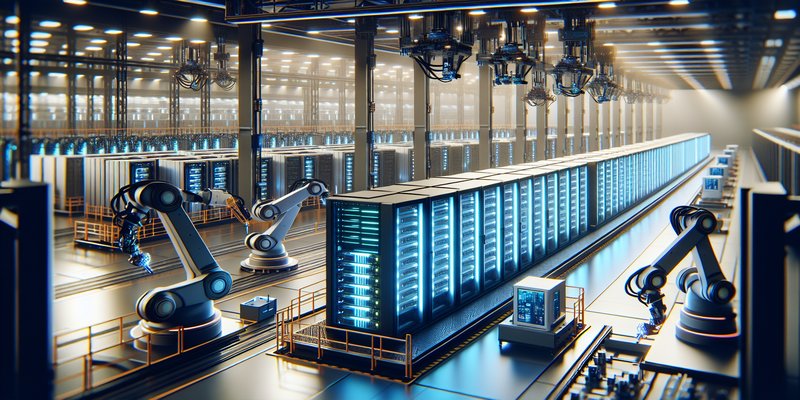
Foxconn, the world's largest electronics manufacturer and a critical link in the AI hardware supply chain, reported combined revenue of NT$1.33 trillion (approximately $41.9 billion) for January and February 2026 — a 21.6% increase over the same period last year and a new record for the company. The growth was driven primarily by surging demand for AI servers built around NVIDIA's GPU platforms, underscoring that artificial intelligence remains a full-stack industrial story, not merely a software upgrade cycle.
Monthly Revenue Breakdown
Foxconn's performance was strong across both months, though the growth drivers varied. January 2026 revenue surged 35.5% year-over-year, fueled by a combination of holiday-season smartphone shipments and accelerating AI server orders. February saw an 8.1% year-over-year increase, with AI-related cloud and networking products continuing to drive growth even as consumer electronics demand normalized after the Lunar New Year period.
The company's cloud and networking products division — which includes AI servers, switches, and data center equipment — has become its fastest-growing segment, benefiting directly from the massive capital expenditure commitments by hyperscale cloud providers.
AI Infrastructure Tailwinds
The revenue surge reflects broader industry dynamics. Alphabet, Amazon, Meta Platforms, and Microsoft have collectively earmarked more than $650 billion in spending this year on data centers and AI capacity. Foxconn, as a primary manufacturer of NVIDIA-based AI server racks, is a direct beneficiary of this capital expenditure wave. Shipments of AI racks and servers continued to increase during the first quarter, with the company reporting strong order visibility extending through the second half of 2026.
"2026 is expected to be a very good year for the company." — Foxconn Chairman Young Liu
Chairman Young Liu projected double-digit full-year revenue growth from the company's approximately NT$8.1 trillion base in 2025, driven by continued momentum in AI servers and a recovery in smartphone demand.
The NVIDIA Connection
Foxconn's AI server business is deeply intertwined with NVIDIA's product roadmap. The company manufactures complete AI server racks — integrating NVIDIA's H200, Blackwell, and next-generation GPUs into rack-scale systems shipped directly to hyperscale data centers. As NVIDIA's GPU product cycles accelerate and data center customers scale their AI training clusters, Foxconn's manufacturing capacity becomes a critical bottleneck in the AI supply chain.
The relationship is mutually reinforcing. NVIDIA needs Foxconn's manufacturing scale to meet demand, while Foxconn's pivot toward AI infrastructure has transformed it from a consumer electronics assembler into a key node in the global AI computing stack.
Broader Taiwan Supply Chain Impact
Foxconn is not alone in riding the AI infrastructure wave. Fellow Taiwan-based manufacturers Wistron and Quanta Computer are also projecting trillion-dollar revenue milestones driven by AI server demand. The concentration of AI hardware manufacturing in Taiwan — encompassing both chip fabrication at TSMC and server assembly at Foxconn and peers — continues to raise questions about supply chain resilience and geopolitical risk.
Market Response
Foxconn's stock has performed strongly in 2026, with investors pricing in the structural shift toward AI infrastructure manufacturing. The company's Q4 2025 revenue had already set records with a 22% year-over-year jump, and the continued momentum into 2026 suggests the AI infrastructure investment cycle has years of growth ahead.
What This Means for Engineers
Foxconn's results confirm that AI is driving demand not just for software engineers but for hardware and systems engineers across the entire computing stack. Roles in data center design, server architecture, supply chain optimization, and manufacturing engineering are expanding rapidly. For engineers preparing for roles in AI infrastructure — from cloud providers to hardware manufacturers — InterviewAlly offers practice on system design and scalability questions that reflect how modern AI infrastructure operates at scale.