Product Launches
NVIDIA GTC 2026: New Chip Architectures Debut March 16
NVIDIA's GTC 2026 conference opens March 16 with Jensen Huang promising chip announcements the world has never seen, including the Feynman architecture.
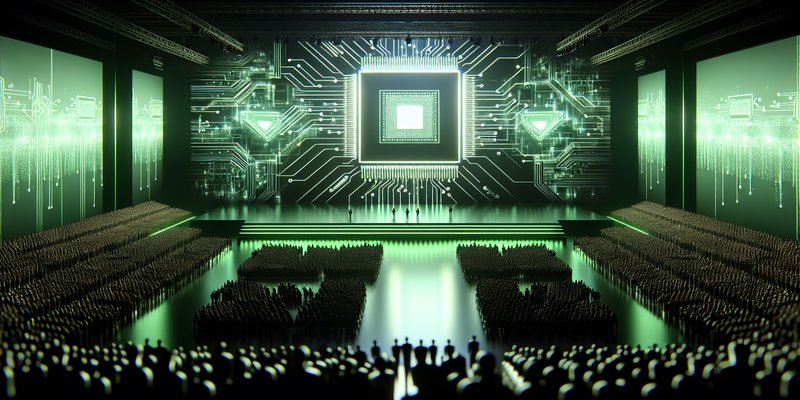
GTC 2026: The AI Industry's Biggest Stage
NVIDIA's GTC 2026 is set to open on March 16 at the SAP Center in San Jose, California, bringing together more than 30,000 attendees from over 190 countries for what has become the AI industry's most anticipated annual gathering. CEO Jensen Huang will deliver the opening keynote at 11 a.m. PT, and he has already signaled that the company plans to unveil several new chips that the world has never seen before.
The four-day conference, running March 16–19, will feature over 1,000 sessions covering AI factories, large-scale inference, robotics, digital twins, scientific computing, and quantum computing. But the spotlight will be squarely on NVIDIA's next generation of silicon — with at least two major chip architectures expected to be formally introduced.
The Feynman Architecture: Next-Gen AI Compute
The most anticipated announcement is the Feynman architecture, NVIDIA's next-generation platform for advanced AI and high-performance computing workloads. Named after physicist Richard Feynman, the architecture is expected to succeed the current Blackwell generation and deliver substantial gains in both training and inference performance.
While specific benchmarks remain under wraps, industry analysts expect Feynman to focus on efficiency at scale — delivering more compute per watt at a time when energy costs and availability have become the primary bottleneck for AI infrastructure expansion. The architecture is also expected to incorporate tighter integration with NVIDIA's networking and optical interconnect technologies, reflecting the company's recent $4 billion investments in photonics suppliers Lumentum and Coherent.
Rubin Updates and a New CPU Play
GTC 2026 is also expected to bring updates to the Rubin AI chip line, which was first previewed at last year's conference. Rubin represents NVIDIA's long-term roadmap for AI-specific silicon, and details on production timelines, partner integrations, and performance specifications are anticipated.
Additionally, reports suggest NVIDIA will introduce a new CPU chip for the PC market, signaling the company's intent to compete more directly with ARM-based processors from Apple and Qualcomm in the consumer and workstation segments. This would mark a significant expansion beyond NVIDIA's traditional GPU stronghold.
Industry Leaders Converge
The conference lineup reflects the breadth of NVIDIA's ecosystem. Notable speakers include Perplexity CEO Aravind Srinivas, LangChain CEO Harrison Chase, Skild AI CEO Deepak Pathak, OpenEvidence CEO Daniel Nadler, and Mistral AI CEO Arthur Mensch. Sessions will span topics from agentic AI systems to physical AI and autonomous robotics.
For enterprise customers, GTC has become the venue where NVIDIA shapes the conversation about what the AI data center stack looks like over the next 12–18 months — from compute to networking to software frameworks.
What This Means for Engineers and Job Seekers
For AI engineers and hardware professionals, GTC 2026 represents more than a product launch event — it is a roadmap for where hiring will accelerate. NVIDIA's chip architectures define the tooling and infrastructure that every AI company builds on, and each new generation creates demand for engineers who can optimize for the latest hardware.
The introduction of Feynman will likely trigger a new wave of hiring across cloud providers, AI startups, and enterprises looking to build or upgrade their AI infrastructure. Professionals with experience in CUDA optimization, GPU programming, and AI systems engineering will be in particularly high demand as the industry prepares for the next compute generation.